Investigate and analyze the words that will be used in this unit for a better compression on heat transfer.
Boundary condictions.
Noun
It consists of prescribed values of the solution and the derivatives of the solution mathematical by the thermal conditions at the boundaries.
Example: Shows a region where a differential equation exists and the values associated with the boundary conditions.
es: Condiciones de frontera.
Dimension
Noun.
It is a number related to the metric or topological properties of a mathematical object. The dimension of an object is a topological measure of the size of its covering properties.
Example: In contrast with the molecular mechanisms involved in the establishment of the other axes, the formation of the dorso-ventral DIMENSION appears to be straightforward.
es: Dimensión
Emissivity.
Noun.
It is a property of the surface that determines the amount of radiation that an object emits at a certain temperature compared to a black body at the same temperature.
Example: Fluke Process Instruments sensors have an adjustable emissivity feature to ensure accuracy when measuring other materials such as shiny metals.
es: Emisividad
Energy balance.
Noun.
It is a set of equilibrium relationships that quantifies the fluids of the energy production, exchange, transformation and final consumption process, expressed in a common Peta Joules (PJ) unit, in an annual period within a state, municipal or regional territory.
Example: Weight gain increases leptin levels and induces a different response, leading to a state of negative ENERGY BALANCE.
es: Balance de energía.
Heat conduction aquation.
Noun
Heat conduction equation in a medium is said to be steady when the temperature does not vary with time and unsteady or transient when it does.
Example: In a metal rod, heat flows from regions where the temperature is higher to regions where it is lower. Fourier's law states that the heat flow J (energy per unit area and unit time is proportional to the temperature gradient.
es: Ecuación de conducción de calor.
Heat flux.
Noun.
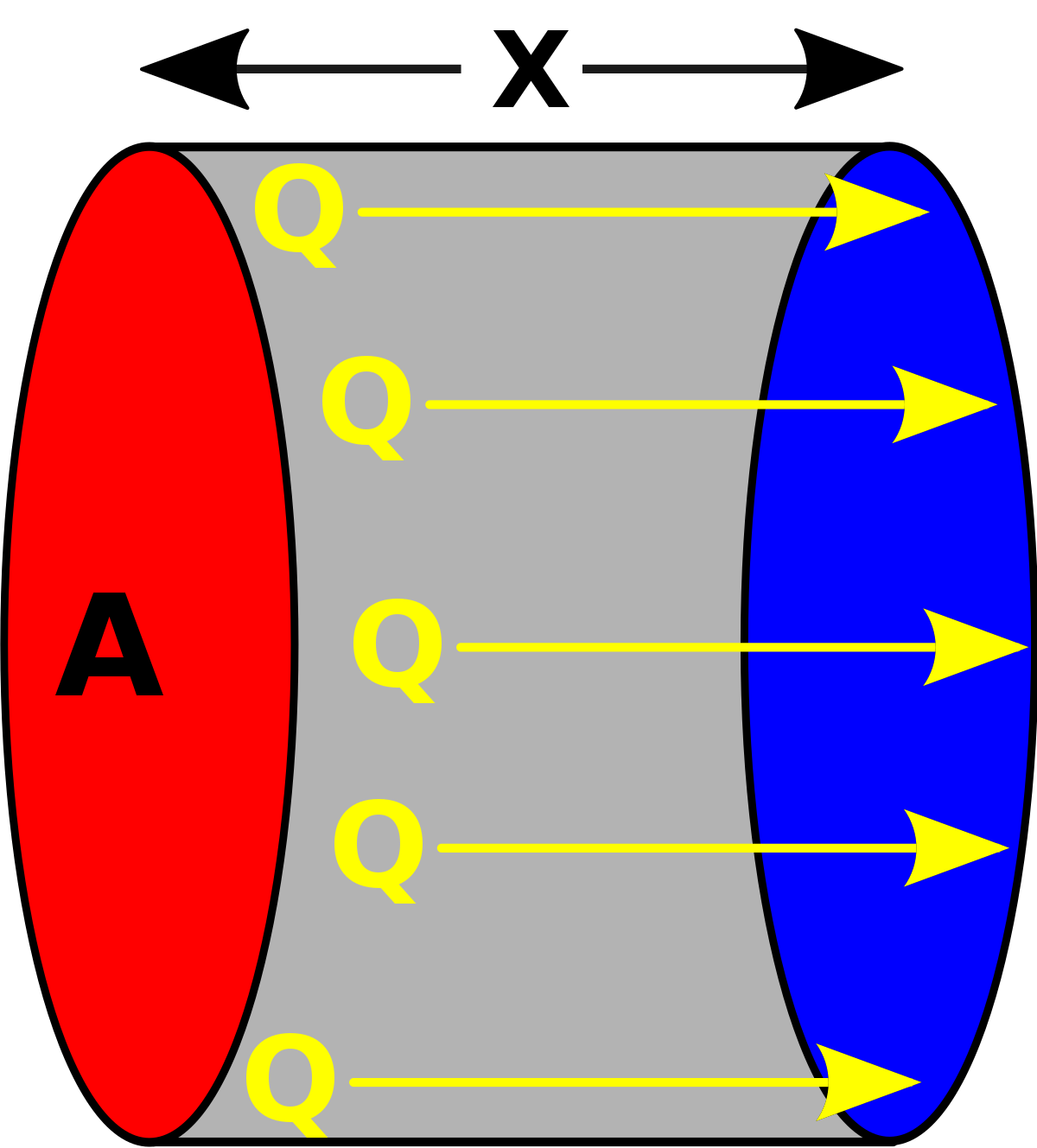
Heat flux is the measure of energy transfer, which is caused by a temperature difference and leads to temperature equilibrium between substances.
Example: When comparing each method, it can be said that the eddy correlation method is perhaps a better method to obtain values of sensible HEAT FLUX, latent HEAT FLUX and the Bowen Ratio.
es: Flujo de calor
Heat generation.
Noun.
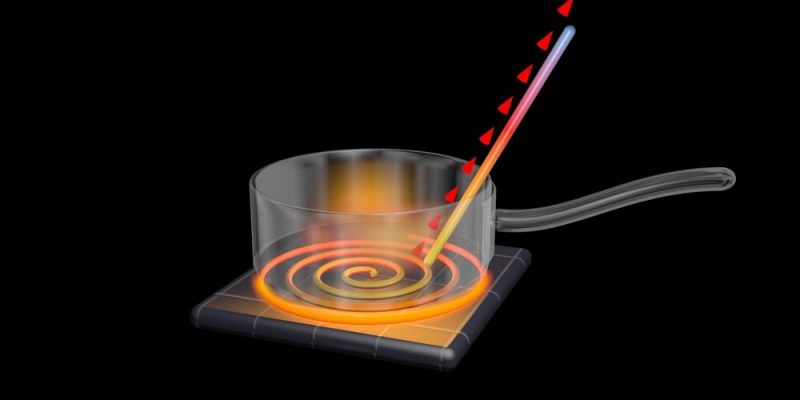
Heat generation is called the transformation of some form of energy into thermal energy, be it electrical by resistance of wire, exothermic chemical reactions in a solid and nuclear reactions in fuel rods.
es: Generación de calor.
Insulation.
Noun.
It is the set of materials and installation techniques that are applied in the construction elements that separate a heated space from the outside or from other spaces to reduce the transmission of heat between them.
Example: The high temperatures of 650°C - 700°C may still be enough to damage INSULATION and anneal the conductor though.
es: Aislamiento.
Internal energy.
Noun.
Internal energy is defined as the energy associated with the random and disorderly motion of molecules. It is on a separate scale from the ordered macroscopic energy, which is associated with moving objects.
Example: This means the system does work on its surroundings, and the change in INTERNAL ENERGY (U) is equal to the heat added (Q) plus the work done (W). This is also known as the first law of thermodynamics: Equation shows that the heat input for a constant pressure process must therefore be greater than that for a constant volume process, in order to get the same change in INTERNAL ENERGY.
es: Energía interna.
Specified temperature.
Noun.
It is the amount of heat necessary to raise the temperature of a unit mass of a substance by one degree.
Example: This quickly passed into the holding tube where it was held at the SPECIFIED TEMPERATURE for approximately 1 - 1.5 seconds.
es: Temperatura especifica.
Thermal conductivity.
Noun.
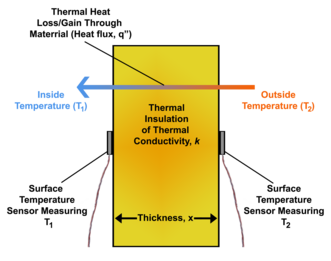
It is a property of certain materials capable of transmitting heat, that is, allowing the passage of the kinetic energy of their molecules to other adjacent substances. It is an intensive quantity, inverse to thermal resistivity (which is the resistance of certain materials to the transmission of heat by their molecules).
Example: The THERMAL CONDUCTIVITY and thickness of the material determine the rate of heat penetration.The steel. With a conductivity of 47 to 58 W / (K.m).
es: Conductividad térmica.
Thermal conductivity.
Noun.
Thermal conductivity (often expressed as k, λ, or κ) refers to the intrinsic ability of a material to transfer or conduct heat.
Example: The THERMAL CONDUCTIVITY and thickness of the material determine the rate of heat penetration.
es: Conductividad térmica.
Thermal diffusivity.
Noun.
It is the value obtained by dividing the thermal conductivity of a certain material divided by the product of the value of its density and its specific heat capacity.
Example: Initial spore load: The severity of the process depends on the initial spore load; good factory hygiene keeps this low. 8.Thermophysical properties : The THERMAL DIFFUSIVITY is the controlling factor.
es: Difusividad térmica.
Thermal symmetry
Noun.
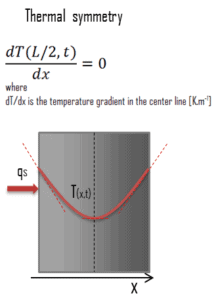
In practice there are some transfer problems which have thermal symmetry as a result of this symmetry there will be no heat flow through the central plane.
Example: For example, the two surfaces of a large hot plate of thickness L suspended vertically in the air will be subject to the same thermal conditions and therefore the temperature distribution will be symmetrical (that is, in the middle of the plate it will have the same temperature profile as that in the other half).
es: Simetría térmica.
Two-dimensional
Noun.
It is a geometric module of the plane and physical projection of the universe where we live. It has two dimensions, that is, it has width and length, but not depth.
Example: (Maizel, 1981) It produces grid TWO-DIMENSIONAL array with one sequence along the X-axis and the other along the Y-axis.